


Leading transformation efforts is the most critical priority for 79% of CFOs in 2024, according to Gartner’s Top 5 Priorities for CFOs. Accounts Payable (AP) automation is central to this goal, ranking as the top digitization priority for the third consecutive year in the 2023 State of AP report.
The business case is compelling: when implemented correctly, automation delivers lower costs, stronger fraud prevention, and real-time cash flow visibility. But many organizations struggle to capture this value. The key to success is not the technology itself, but the strategy behind it.
A successful AP transformation requires a proven, “process-first” methodology. This guide outlines the essential AP automation best practices that separate high-ROI projects from failed ones.
What is AP automation?
Automation stands as the linchpin for modernizing AP operations. It’s not merely about digitizing; it’s about comprehensive process automation that streamlines workflows from invoice receipt to payment – minimizing common pain points like lost paper invoices, manual data entry, approval delays, and the risk of human error that lead to late payments.
The potential cost savings and efficiency improvements are significant and emphasize the transformative power of technology. Powered by advancing innovation like AI, machine learning, and optical character recognition (OCR), AP automation can deliver real-time visibility into cash flow, touchless payments, faster processing, a streamlined approval process, a better ability to catch fraud, fewer errors, standardized workflows, and decreased time and expense.
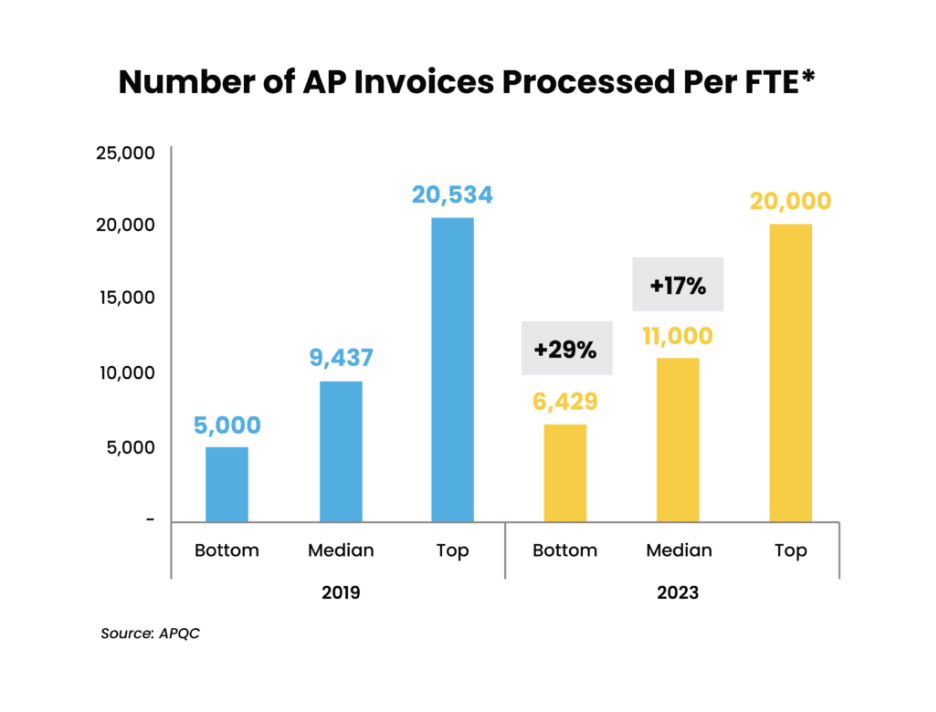
Nearly 90% of AP teams report efficiency gains and 64% report a faster, more timely payment process with AP automation, according to the State of AP report. As automation became increasingly embedded in accounts payable, the number of invoices processed per FTE increased by an average of 17% between 2019 and 2023, according to American Productivity & Quality Center (APQC) data.
The number of disbursements processed improved by an average of 21%.
Amid rising F&A labor costs and severe F&A labor shortages in the U.S., automation also enables the AP department to do more with less. Finance teams that implemented automation report 24% lower staffing levels than organizations that have not, APQC reports.
6 AP automation best practices
So, how do you achieve the right results? Whether you are customizing solutions from intelligent automation platforms like UiPath or taking advantage of automation capabilities embedded in your enterprise resource planning (ERP) system, following these best practices can help you realize the full potential of your AP automation initiatives:
1. Assess your workflows
Standardizing AP processes forms the bedrock of efficient automation. Establishing uniform guidelines for invoice processing, approvals, and payments reduces errors, enhances compliance, and achieves greater transparency.
Gaining visibility into process exceptions – as well as their root causes – is a critical part of this process, ensuring constant interruptions don’t prevent your automation from delivering expected ROI.
Prioritize fixing process failures that drive the most exceptions so your automation initiatives achieve the biggest impact. You can also use automation to improve exception resolution, auto-assigning to respective stakeholders to speed cross-functional collaboration and resolution.

2. Address the full Procure-to-Pay process
In the rush to implement AP automation, here’s what many finance leaders overlook: Exceptions to AP processes often stem from process or control weaknesses outside of AP that also need addressing. Assessing the full P2P process is vital to achieving the full potential of the technology.
In many organizations, information is siloed and different departments follow different processes, leading to invoice discrepancies, missed approvals, duplicate payments, and other issues as well.
Creating a clear, well-documented P2P policy is an important AP automation best practice, implementing parameters and guidelines that facilitate smoother operations. A well-crafted policy establishes authorization requirements for purchases, purchase order requests, vendor criteria, spending limits, role-based guidelines, and more – helping you simplify the P2P process and leverage automation effectively.
End-to-end automation can also foster simple, seamless cohesion between accounts payable and procurement systems that increases visibility, streamlines data flow, enables real-time access to financial information, and reduces processing time and human error. You can further guard against errors by setting automation rules that ensure every step of a process is completed before proceeding to the next step.
3. Get your data house in order
Cleaning and standardizing invoice and vendor data is key to a successful accounts payable automation program, minimizing exceptions and errors that lead to payment delays. AP automation software can’t function properly if your data isn’t clean – struggling to automatically locate, validate, and utilize vendor information or match invoices to purchase orders and receipts.
Unfortunately, proper management of the master vendor data file stands as a common AP challenge: 67% of respondents in a CFO & Controller poll admitted their master vendor data file “could use a little cleaning.” Nearly 20% called it “a total mess.”
Before you automate, implement a structured process for maintaining a clean database – standardizing how vendors are added to your system, creating consistent naming conventions for invoices, cleansing your data regularly, and more.
Getting your data house in order ensures consistent historical data that makes it easier to analyze vendor performance, track spending patterns, and negotiate better payment terms. It further enhances your reporting capabilities, enabling more strategic decision-making.
4. Don’t automate everything at once
Automation is a journey, not a sprint. While there’s a lot in AP that can be improved with automation, that doesn’t mean you have to do it all at once.
Setting realistic expectations is also important. For example, 100% touchless automation is an intimidating goal that can stop your organization from getting started.
While top-quality automation providers can come close to that number, the percentage of AP invoices that become “touchless” typically averages between 60-80%, depending upon an organization’s unique circumstances and process exceptions. Read our case study to learn how Auxis’ tech-enabled outsourcing solution achieved 95% touchless invoice processing for an e-commerce retail client.
Rolling out automation in phases is another AP automation best practice, creating momentum with quick wins that spread enthusiasm enterprise-wide. This strategy supports change management – giving your team time to adjust to new processes while providing early, concrete evidence of how automation can directly improve their work lives.
Restructuring large-scale automation initiatives into a series of smaller, faster projects supports cost management as well – achieving quicker returns with less upfront spend.
5. Pick the right accounts payable automation tools for your situation
As demand for AP automation grows, the number of technology choices has become daunting.
Whether your goal is streamlining workflows, reducing approval times, speeding payments, minimizing errors, or something else, determining your biggest driver for implementing automation is the first step to choosing the right tool for your organization.
But with so many diverse technology options marketing different strengths and capabilities – from machine-learning powered Intelligent Document Processing to Robotic Process Automation to Electronic Data Interchange (EDI) solutions – many AP leaders still struggle to make selections that avoid buyer’s remorse.
For example, some automation options are truly payment solutions with AP automation as an add-on feature. Others rely on a matrix-only system for approvals that don’t consider when someone is out sick or leaves the company.
A quality accounts payable partner can help you narrow down the overwhelming number of choices and implement the right solution for your unique needs. The best partners combine business and technical knowledge to help you identify the best automation opportunities, prioritize your roadmap, and achieve sustainable success.
They will also drive continuous improvement, leveraging analytics and performance metrics to identify bottlenecks and enhance workflows to ensure you achieve desired results.
6. Define and measure success with clear KPIs
You cannot manage what you do not measure. Before you begin, you must establish the baseline metrics for your current AP process.
Key KPIs to track include cost-per-invoice, invoice-processing time, first-pass match rate, and days payable outstanding (DPO).
These KPIs will become the basis for your business case. They allow you to measure your progress, quantify your ROI, and prove the strategic value of the transformation to leadership.
Why Auxis: Maximize the value of your AP automation journey
Getting AP automation right is critical for transforming your finance function into a strategic business asset. But unlocking its full potential means reimagining how work gets done.
Most organizations lack the in-house expertise to navigate this transformation. An experienced implementation partner can fill this critical gap, bringing the technical skills and strategic insight needed to drive real business value.
As a UiPath Diamond Partner and the 2024 Foundational Americas Partner of the Year, Auxis doesn’t just implement technology—we re-engineer the entire function. We back this technical excellence with nearly 30 years of finance transformation experience, delivering tailored solutions that produce measurable results. By leveraging our high-performance nearshore model, you gain a highly skilled team in your time zone and the real-time control necessary to turn your AP department into a center of excellence.
Want to learn more about AP automation solutions? Schedule a consultation with our accounts payable team today!
Frequently Asked Questions
What is the first step in AP automation?
How does AI change the role of the AP team?
What is the 80/20 rule in AP automation?
What is the difference between simple automation and true AP transformation?